
Posted On 16 May 2026
Smart home devices—like cameras, thermostats, doorbells, and voice assistants—make life more convenient, but they also expand your attack surface. Many of these devices ship with weak default settings, making them attractive targets for hackers. Securing them doesn’t require advanced skills, just consistent best practices.
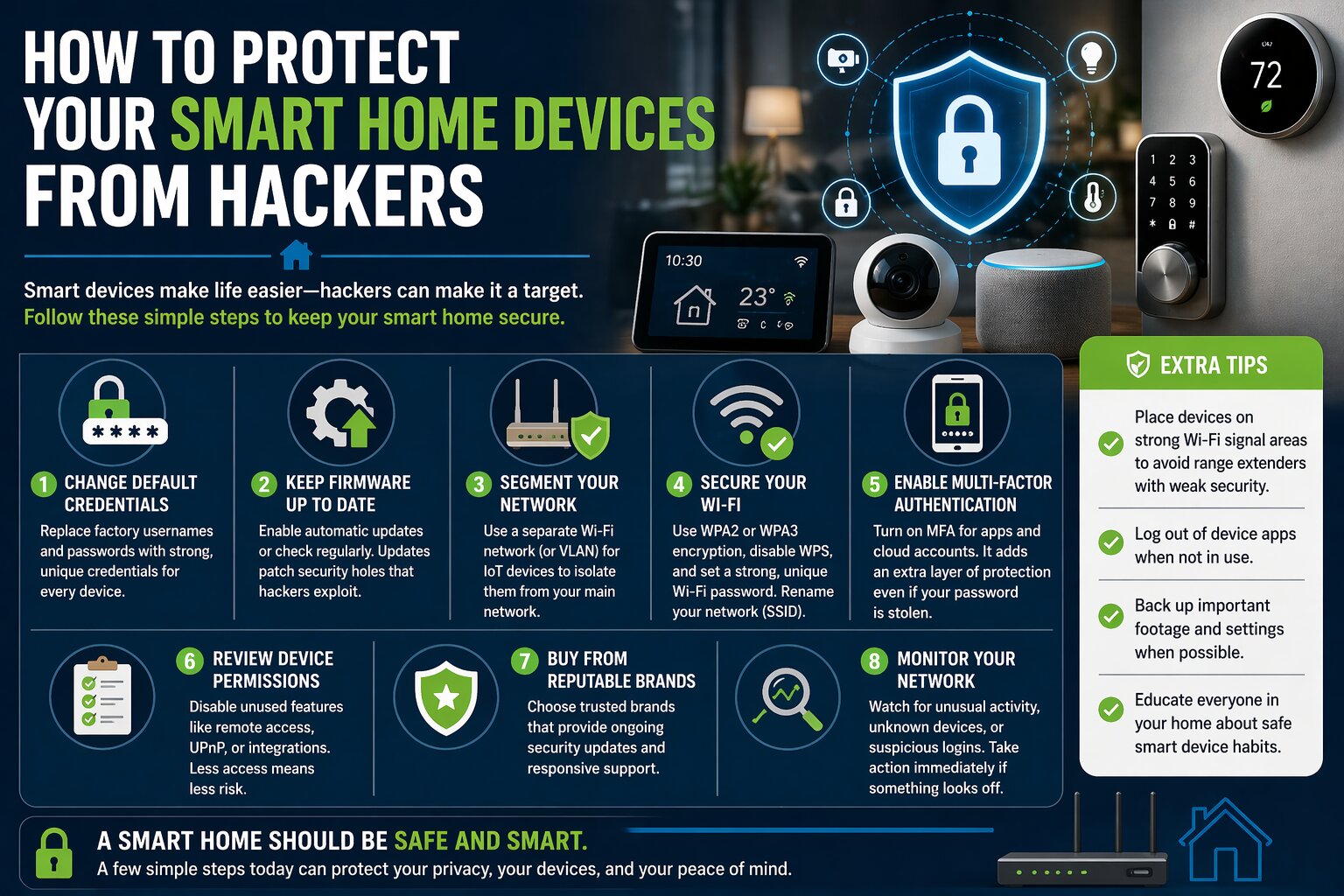
Start by changing default credentials. This is the most overlooked step. Many devices come with factory usernames and passwords that are widely known. Set a unique, strong password for every device, and avoid reusing credentials across accounts.
Keep firmware up to date. Manufacturers regularly release updates to patch vulnerabilities. Enable automatic updates where possible, or check for updates monthly. Outdated firmware is one of the easiest entry points for attackers.
Segment your network. If your router supports it, create a separate Wi-Fi network (or VLAN) for IoT devices. This isolates them from your main computers and phones, limiting lateral movement if a device is compromised.
Secure your Wi-Fi properly. Use modern encryption (WPA2 at minimum, preferably WPA3), disable WPS, and set a strong, unique Wi-Fi password. Rename your network (SSID) to something non-identifiable to avoid broadcasting personal details.
Enable multi-factor authentication (MFA). For any associated apps or cloud accounts, turn on MFA. Even if a password is exposed, MFA adds a critical second layer that blocks unauthorized access.
Review device permissions and features. Disable unnecessary services like remote access, UPnP, or unused integrations. The fewer open pathways, the smaller your risk footprint.
Buy from reputable brands. Established manufacturers are more likely to provide ongoing security updates and support. Cheap, off-brand devices often lack proper security and patching.
Finally, monitor your network. If you notice unusual behavior—devices going offline, strange notifications, or unknown logins—take action immediately.
Smart homes don’t have to be vulnerable. With a few proactive steps, you can enjoy the convenience while keeping your network and personal data secure.