
Posted On 07 May 2026
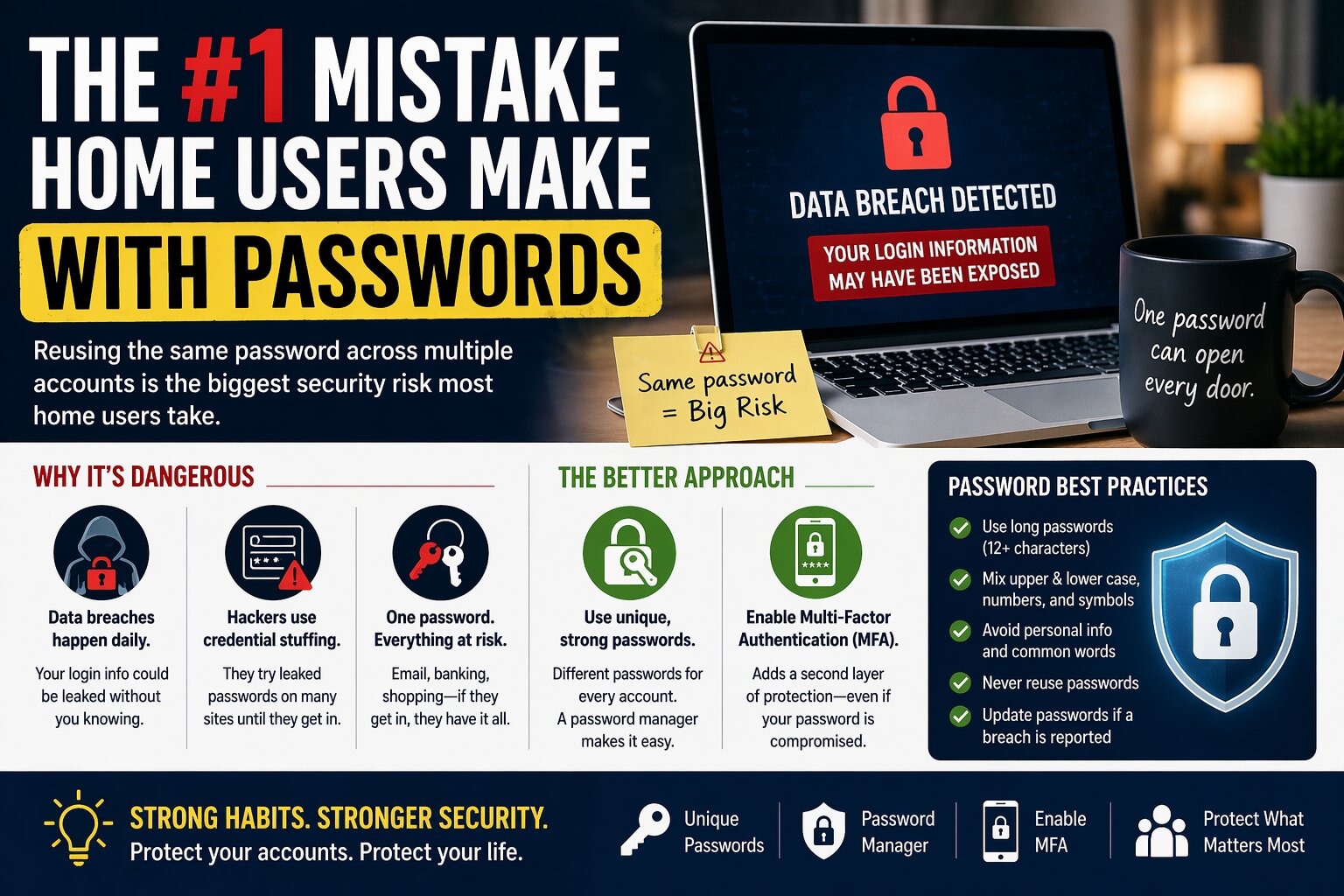
When it comes to cybersecurity, most home users think their biggest risk is getting hacked by some sophisticated attack. In reality, the biggest vulnerability is much simpler: reusing the same password across multiple accounts.
It’s understandable. Remembering dozens of unique passwords can feel overwhelming, so many people use one “go-to” password for everything—email, banking, social media, and even work-related accounts. The problem is, once that password is exposed in a single data breach, every account tied to it becomes vulnerable.
Data breaches happen constantly, often without users even realizing it. When a website is compromised, login credentials are frequently leaked or sold online. Cybercriminals then use automated tools to try those same credentials across other platforms—a tactic known as credential stuffing. If you’ve reused your password, it’s essentially handing over access to multiple accounts at once.
Another issue is using slight variations of the same password, like changing a number or adding an exclamation point. These patterns are predictable and easily cracked by modern hacking tools.
The good news is this is one of the easiest problems to fix. The best approach is to use unique, complex passwords for every account. A password manager can generate and securely store these for you, so you don’t have to remember them all. Additionally, enabling multi-factor authentication (MFA) adds a critical second layer of protection, even if your password is compromised.
Think of your passwords like keys. If every door in your life uses the same key, losing it puts everything at risk. By using different, secure passwords, you’re limiting the damage and protecting what matters most.
In 2026, strong password habits aren’t optional—they’re essential.