
Posted On 07 Feb 2026
Valentine’s Day is a time for connection and celebration, but it is also one of the busiest seasons for online scams. Cybercriminals take advantage of emotions, increased online shopping, and dating activity to trick people into giving up money or personal information. Understanding the most common Valentine’s Day scams can help you avoid becoming a victim.
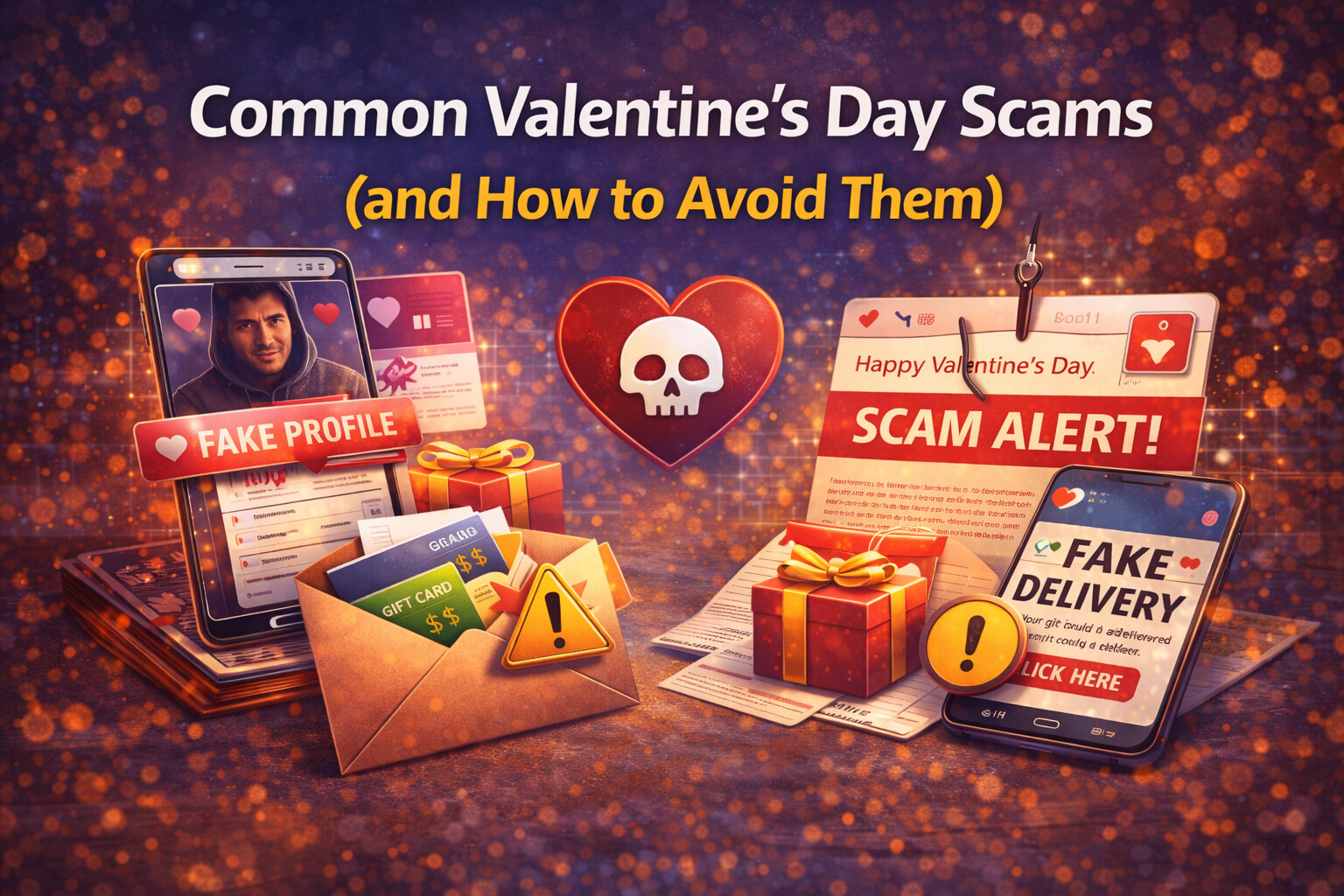
One of the most prevalent scams is the romance scam. Scammers create fake profiles on dating apps or social media and build emotional relationships over time. Once trust is established, they invent emergencies or financial hardships and ask for money, gift cards, or cryptocurrency. These requests are often urgent and designed to pressure victims into acting quickly.
Another common threat involves fake Valentine’s Day deals. Emails, texts, or ads may promote deeply discounted flowers, jewelry, or travel packages. Clicking these links can lead to fraudulent websites that steal credit card information or install malware on your device.
Fake delivery notifications also spike around Valentine’s Day. Victims receive messages claiming a gift could not be delivered and are asked to click a link to reschedule. These links often lead to phishing pages that collect personal or login information.
To protect yourself, be cautious of unsolicited messages and offers that seem too good to be true. Never send money or gift cards to someone you have not met in person, and avoid clicking links in unexpected emails or texts. Always verify sellers by visiting their websites directly rather than using embedded links.
Keeping your computer and mobile devices updated with security software adds an important layer of protection. Awareness and skepticism are your best defenses. By staying alert, you can enjoy Valentine’s Day without falling victim to seasonal scams.