
Posted On 02 May 2026
As technology evolves, so do the tactics scammers use to target everyday users and small businesses. Summer 2026 is already seeing a rise in more sophisticated and convincing tech scams, many of which are designed to create urgency and panic. Knowing what to watch for can save you time, money, and serious headaches.
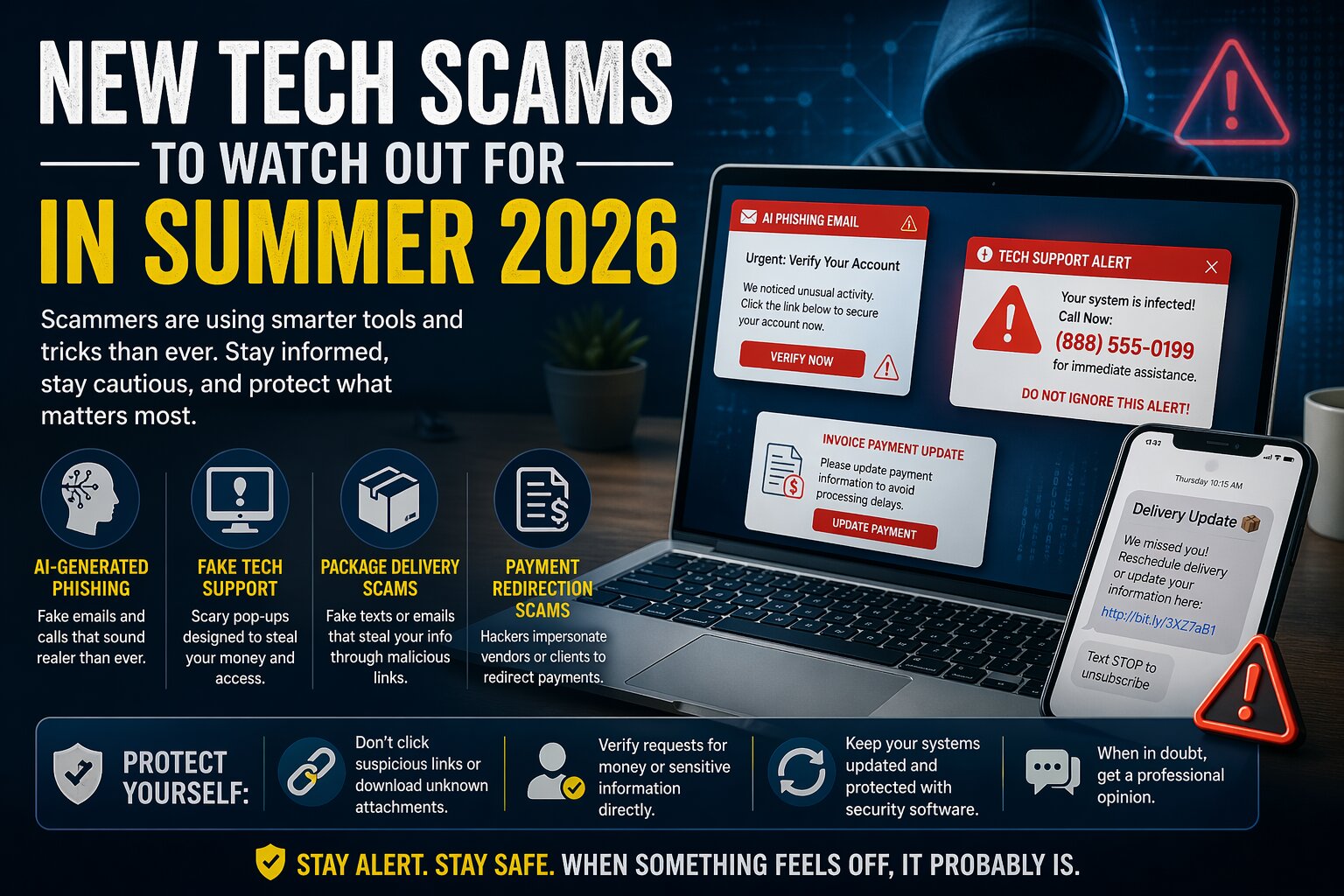
One of the fastest-growing threats is AI-generated phishing emails and voice calls. Scammers now use artificial intelligence to mimic real companies—or even people you know. You might receive a call that sounds like your bank or a familiar voice asking for urgent help. These scams are highly convincing and often pressure you to act quickly.
Another common tactic is fake tech support pop-ups. These appear while browsing and claim your computer is infected, urging you to call a number immediately. Once you do, the scammer attempts to gain remote access to your system and charge you for unnecessary “repairs.”
Package delivery scams also spike during the summer months. With more online shopping and travel, fake texts or emails claiming a missed delivery or shipping issue are increasingly common. These messages usually contain malicious links designed to steal your personal information.
Small businesses should be especially cautious of invoice and payment redirection scams. Hackers may impersonate vendors or clients and request payment changes, leading to costly mistakes if not verified properly.
The best defense is awareness and a few simple habits:
• Never click suspicious links or download unknown attachments
• Verify requests for money or sensitive information directly
• Keep your systems updated and protected with modern security tools
• When in doubt, get a professional opinion
If something feels off, it probably is. Staying cautious and informed is your first line of defense against today’s evolving tech scams.