
Posted On 16 Apr 2026
Passwords are the first line of defense for your personal and financial information—but many people are still using outdated or weak credentials without realizing the risk. As cyber threats continue to evolve, it’s important to review and update your passwords regularly to stay protected.
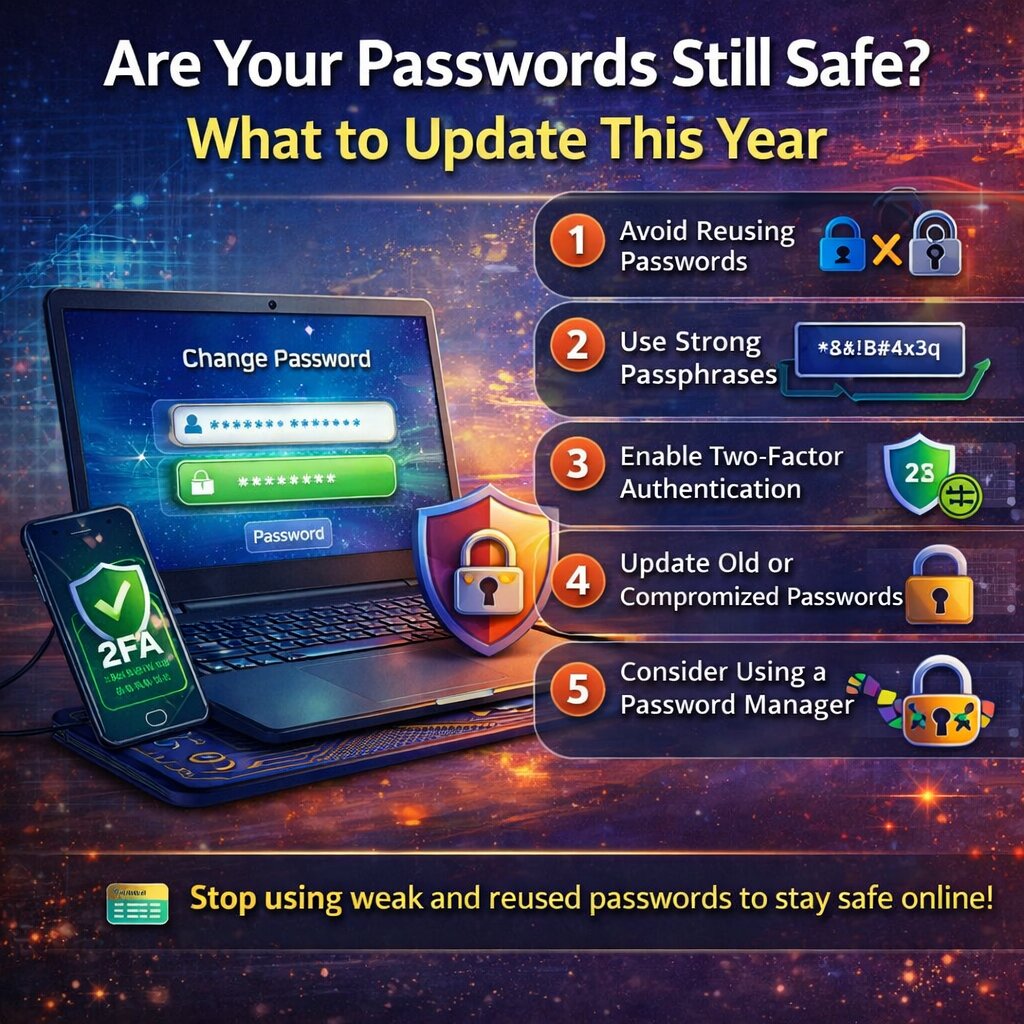
One of the biggest issues is password reuse. If you use the same password across multiple accounts, a single data breach can expose everything—from your email to your bank accounts. Each account should have a unique password, especially for critical services like banking, email, and social media.
Another common problem is weak passwords. Simple combinations like “123456,” “password,” or even your pet’s name are easy for hackers to guess. Instead, use long, complex passwords that include uppercase and lowercase letters, numbers, and symbols. Better yet, consider using passphrases—a string of random words that are easier to remember but harder to crack.
This year, it’s also essential to enable two-factor authentication (2FA) wherever possible. This adds an extra layer of security by requiring a second step—like a code sent to your phone—even if someone has your password.
You should also update old passwords, especially on accounts you’ve had for years. If a service has experienced a data breach, change your password immediately. It’s also a good idea to check if your email has been involved in a breach using trusted tools.
Managing multiple strong passwords can be overwhelming, which is why password managers are highly recommended. They securely store and generate passwords so you don’t have to remember them all.
Taking time to update your passwords now can prevent serious problems later. In today’s digital world, strong password habits are one of the easiest—and most effective—ways to protect yourself.


