
Posted On 21 Feb 2026
Buying a new computer should be an exciting upgrade, but many people end up frustrated because of common purchasing mistakes. Understanding these pitfalls can help you choose a system that meets your needs, lasts longer, and provides better value.
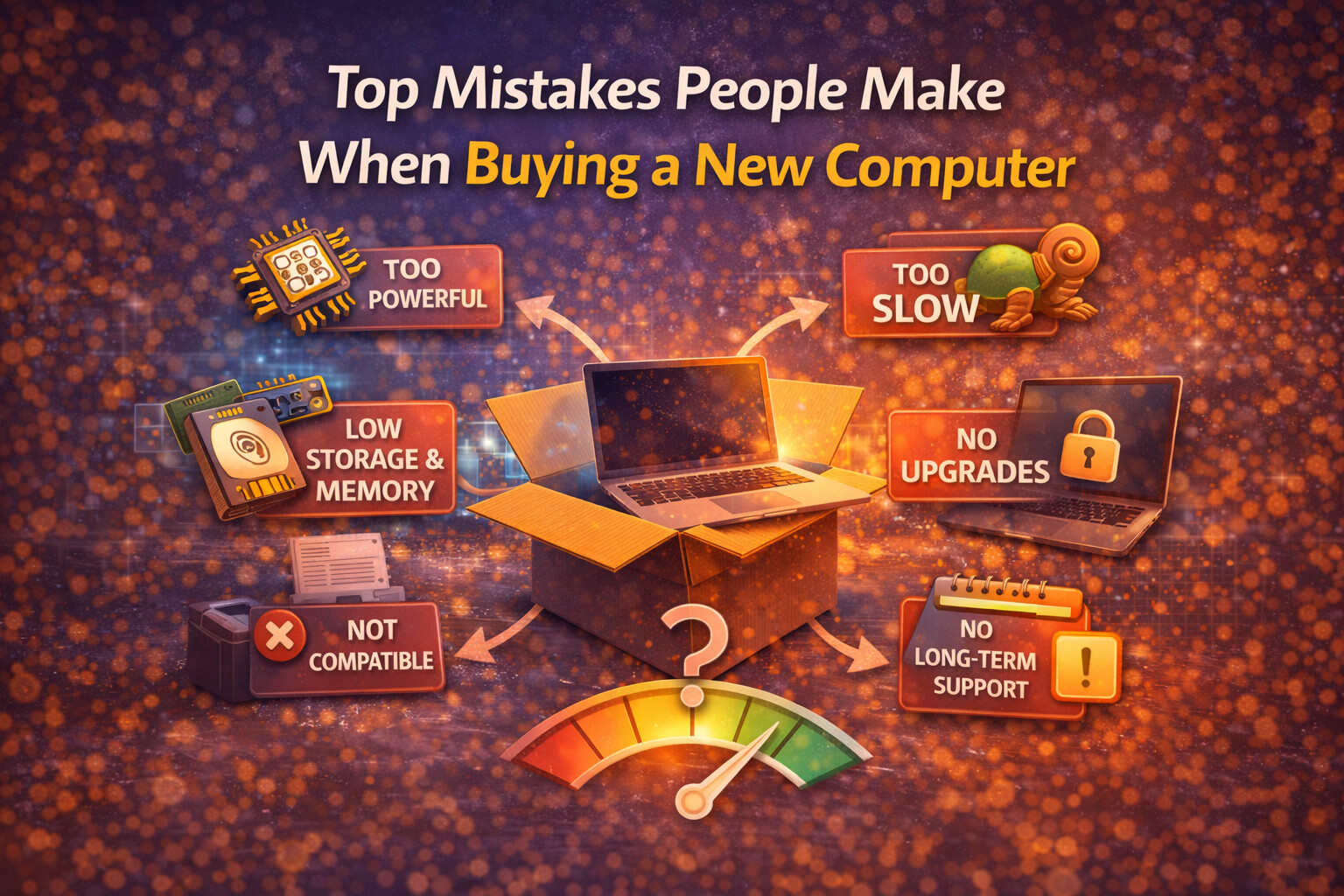
One of the most frequent mistakes is buying either too much or too little power. Some buyers overspend on high-end processors and graphics cards they will never use, while others choose the cheapest option available and struggle with slow performance within months. The key is matching the computer’s specifications to how you actually use it.
Another common issue is ignoring storage and memory. Many new computers ship with minimal storage or limited RAM, which can quickly become a problem as software and files accumulate. Insufficient memory affects multitasking, while small storage drives fill up fast. Choosing a system with adequate RAM and a solid-state drive makes a noticeable difference in daily performance.
People also overlook upgradeability. Some low-cost laptops and desktops cannot be upgraded later, limiting their lifespan. If memory or storage is soldered or inaccessible, you may be forced to replace the entire system sooner than expected.
Compatibility is another area where mistakes happen. Printers, scanners, specialized software, or older accessories may not work properly with newer systems. Checking compatibility before purchasing can prevent costly surprises.
Finally, many buyers focus only on price and ignore long-term support. Warranty coverage, operating system updates, and manufacturer reliability all affect how long a computer remains useful and secure.
Taking time to evaluate your needs and seek professional advice can help you avoid these mistakes. A well-chosen computer not only performs better today but also remains reliable and cost-effective for years to come.


