
Posted On 15 Jan 2026
As cyber threats continue to evolve, small businesses and residential users must remain vigilant. Early 2026 is expected to bring increasingly sophisticated malware and scams that leverage artificial intelligence, social engineering, and cloud-based platforms. Understanding these trends can help you protect sensitive data, maintain operational continuity, and reduce risk.
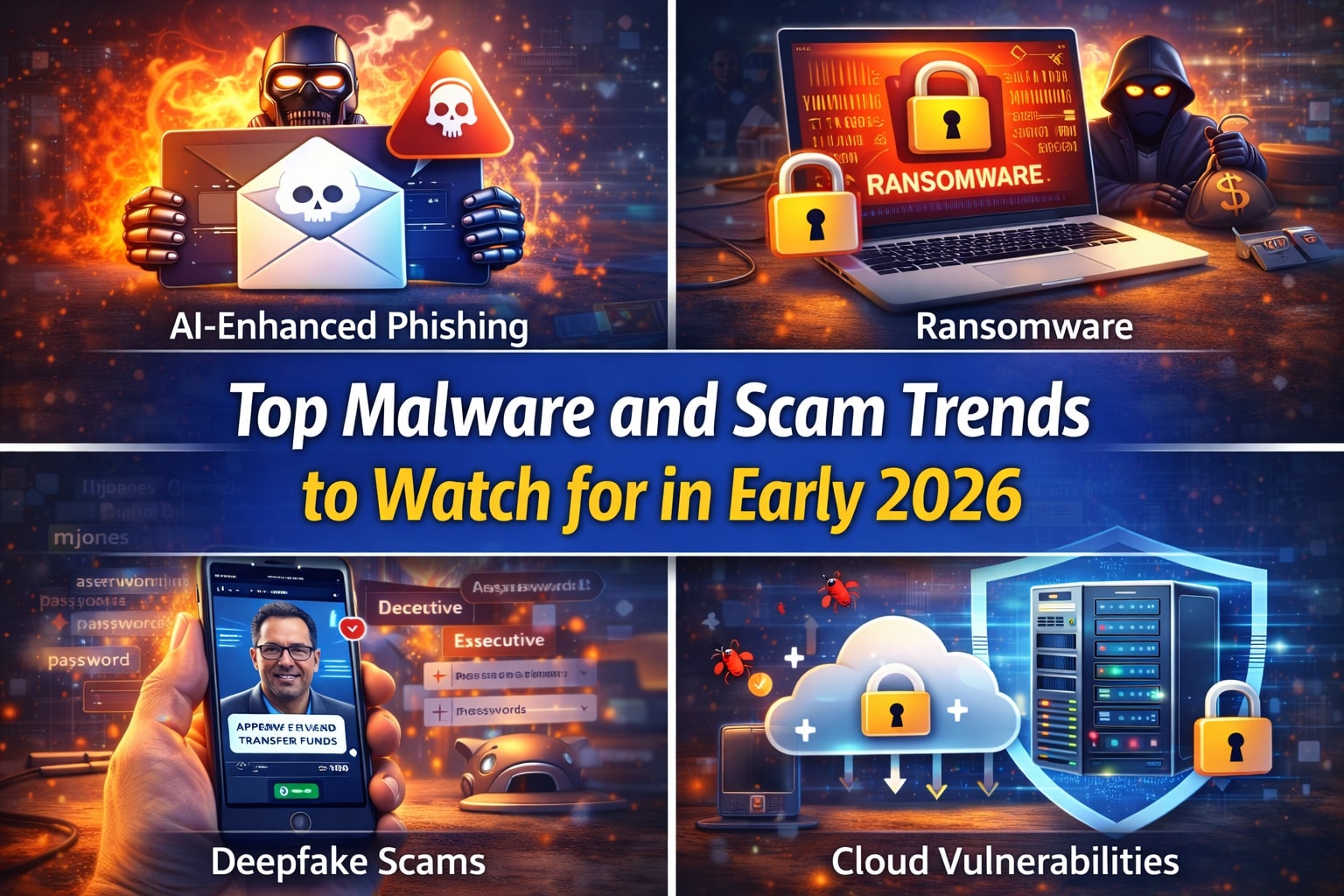
One anticipated trend is the rise of AI-enhanced phishing. Cybercriminals are using generative AI to craft highly personalized messages that appear legitimate, making it harder for individuals to distinguish real communications from fraudulent ones. These messages may reference recent transactions, client names, or internal processes, increasing the likelihood of a successful compromise.
Ransomware continues to be a major threat, with attackers using double-extortion tactics. In these attacks, data is encrypted and exfiltrated; cybercriminals then demand payment not only to decrypt files but also to prevent public release of stolen information. Small businesses are often targeted because they may lack robust backup and recovery systems, making ransomware payments more likely.
Another emerging concern is AI-generated deepfake scams, where attackers impersonate executives or vendors via audio or video to authorize fraudulent payments or disclose confidential information. These scams exploit trust relationships and can bypass traditional written verification methods.
Cloud service vulnerabilities are also expected to be exploited more aggressively. As businesses shift infrastructure and data storage to cloud platforms, misconfigured permissions or unsecured APIs can expose critical assets. Attackers increasingly scan for these weaknesses to deploy malware or access sensitive repositories.
Additionally, credential-stuffing attacks remain prevalent. With many individuals reusing passwords across multiple accounts, attackers use automated tools to test leaked credentials against other services, gaining unauthorized access with minimal effort.
To mitigate these risks, implement multi-factor authentication, maintain updated security software, educate users on recognizing threats, and enforce strong password policies. Regular backups, monitoring, and incident response planning will further strengthen your defenses against evolving malware and scam trends in 2026.


